Searches for “pay for garden waste collection” have surged by 150% in the last 30 days as more people spend time outdoors and start tidying gardens for summer.
But the cost of garden waste collection can vary significantly depending on where you live.
New research from Divert has analysed garden waste collection charges* across UK councils to reveal which areas pay the most, which pay the least, and where free services are still available.
The analysis found that Waverley Borough Council has the highest garden waste collection charge in the UK, at £136.70 per bin. This is 229.79% higher than the UK average of £41.45.
Garden waste charges were collected from individual council websites, the cost of service is based on the assumption that customers are new and may not already have a bin.* They and are correct as of 8 June 2026. Prices, discounts, collection rules, and subscription terms may change.
The councils charging the most for garden waste collection
The most expensive garden waste collection services are concentrated in the South East and London.
The top 10 highest garden waste collection charges are:
Waverley Borough Council: £136.70
East Hampshire District Council: £130.00
Kingston upon Thames: £104.00
Barnet: £103.80
Brighton and Hove City Council: £102.00
Isle of Wight Council: £102.00
Lewisham: £100.63
Enfield: £100.00
Mid Sussex District Council: £99.50
Adur & Worthing Councils: £99.00
Waverley Borough Council, which covers areas including Godalming, Farnham, and Haslemere, ranked as the most expensive authority in the research. Its garden waste collection service runs as an annual subscription, with fortnightly collections.
East Hampshire District Council followed closely behind at £130. The council’s service also runs on a subscription basis and does not include collections over the Christmas period. It is one of only two councils in the top 10 to list a reduced option, with a £28 sack subscription available for benefit reduction customers.
Kingston upon Thames ranked third, charging £104 for a garden waste collection subscription. The service runs for 12 months from the first collection, with fortnightly collections.
Several councils in the top 10 also charge the same full subscription cost for more than one bin, meaning households with larger gardens may pay significantly more.
The cheapest garden waste collection charges
The lowest-cost garden waste services are not always directly comparable, as some councils charge per sack or bag rather than offering an annual wheeled-bin subscription.
However, the lowest garden waste charges identified in the research were:
Ceredigion County Council: £2.30 per bag
Caerphilly County Borough Council: £4.10 per sack
Bury Borough Council: £17.50
Blackpool Council: £30.00
Barnsley Borough Council: £32.00
Colchester City Council: £32.50
Ashfield District Council: £35.00
Hyndburn Borough Council: £35.00
North Tyneside Borough Council: £35.00
Nottingham City Council: £36.50
Ceredigion County Council had the lowest listed charge in the research, at £2.30 per bag. Caerphilly County Borough Council followed at £4.10 per sack.
These lower costs show why it is important to look beyond headline prices. A per-bag charge may suit households with small gardens, but could become less practical for those producing larger volumes of grass cuttings, hedge trimmings, branches, or seasonal garden waste.
Bury Borough Council was the lowest annual-style charge identified in England, at £17.50. The council notes that the lower charge is designed to encourage recycling.
Garden waste collection costs by region
The South East has the highest average garden waste collection cost in the UK, at £72.14.
London follows at £68.09, with the South West close behind at £66.78.
The average garden waste collection costs by region are:
South East: £72.14
London: £68.09
South West: £66.78
East of England: £54.67
West Midlands: £47.99
East Midlands: £44.10
North East: £43.17
Scotland: £41.93
North West: £34.51
Yorkshire and the Humber: £29.84
Wales: £28.95
Northern Ireland: £5.34
Northern Ireland recorded the lowest average cost, largely because many councils include garden waste as part of existing kerbside collection services.
Yorkshire and the Humber also sits well below the UK average, with an average charge of £29.84.
Where are free garden waste collections still available?
Our research found that 46 councils offer some form of free garden waste service, although what this includes varies by council.
Some free services may only apply to specific container types, limited collection periods, certain property types, or areas where garden waste is included within wider kerbside recycling.
By region, the highest proportions of councils offering a free service are:
Northern Ireland: 7 out of 11 councils, 64%
Yorkshire and the Humber: 6 out of 15 councils, 40%
North West: 10 out of 36 councils, 28%
Wales: 5 out of 22 councils, 23%
Scotland: 4 out of 31 councils, 13%
The South West and North East had no councils recorded as offering a free garden waste service in this dataset.
Only 3% of councils in the South East offered a free service, despite the region having the highest average garden waste collection cost.
Why do garden waste collection costs vary so much?
Garden waste collection charges vary because councils structure their services differently.
Some operate annual subscriptions. Others charge per bag, sack, bin, or collection. Some include garden waste within household recycling, while others run it as an optional paid service.
Costs can also depend on:
Collection frequency
Whether the service pauses over winter
Whether additional bins cost extra
Whether food waste is accepted
Whether discounts are available
The cost of processing garden waste locally
Transport and staffing costs
This means a cheaper service is not always better value, especially if it offers fewer collections or uses smaller containers.
It also means residents should check what is included before comparing prices.
What can go in garden waste collections?
Most council garden waste collections accept typical garden materials such as grass cuttings, hedge trimmings, weeds, plants, leaves, twigs, and small branches.
However, rules differ between councils. Many services do not accept food waste, soil, rubble, plant pots, treated wood, or large branches.
With Simpler Recycling now changing how food waste is separated in England, households should pay close attention to whether food waste is accepted in their garden waste bin. Many councils in the higher-cost list specifically state that food waste is not accepted.
Putting the wrong waste in a garden bin can lead to missed collections or contamination issues.
Expert comment
John Verity, Managing Director at Divert, comments on garden waste costs:
“Garden waste collection costs vary massively across the UK, so households should check what they’re actually paying for before signing up. For some, an annual council subscription will work well, but for one-off clearances or larger garden projects, a licensed collection service may be more practical and cost-effective.”
What to do if council garden waste collection does not suit your needs
Council garden waste collections are useful for regular, smaller amounts of garden waste. But they may not suit everyone. A paid subscription may not be worth it if you only clear your garden once or twice a year. It may also be difficult if you produce large amounts of waste after landscaping, hedge cutting, tree work, or a major garden tidy.
In these cases, a one-off garden waste collection can be more practical.
Divert provides garden waste clearance for households and businesses that need help removing larger or irregular amounts of garden waste. This can include waste from garden clearances, seasonal tidy-ups, and outdoor projects.
Our service offers an alternative for people who do not want an annual subscription or need waste removed quickly.
Methodology
Divert analysed garden waste collection costs listed on individual UK council websites.
Where possible, the listed cost for a garden waste subscription was recorded. If a council did not offer a garden waste collection service, did not provide a clear price, did not charge per item or subscription, or did not provide the service directly, the entry was omitted from the price ranking.
Discounts were recorded where they were listed on the council website. Notes were added to explain individual charging systems, including whether services were based on annual subscriptions, sacks, bags, seasonal collections, or additional bin charges.
Data is correct as of 8 June 2026 and is subject to change.
The full dataset can be viewed here
Name Our New Birmingham Bin Truck
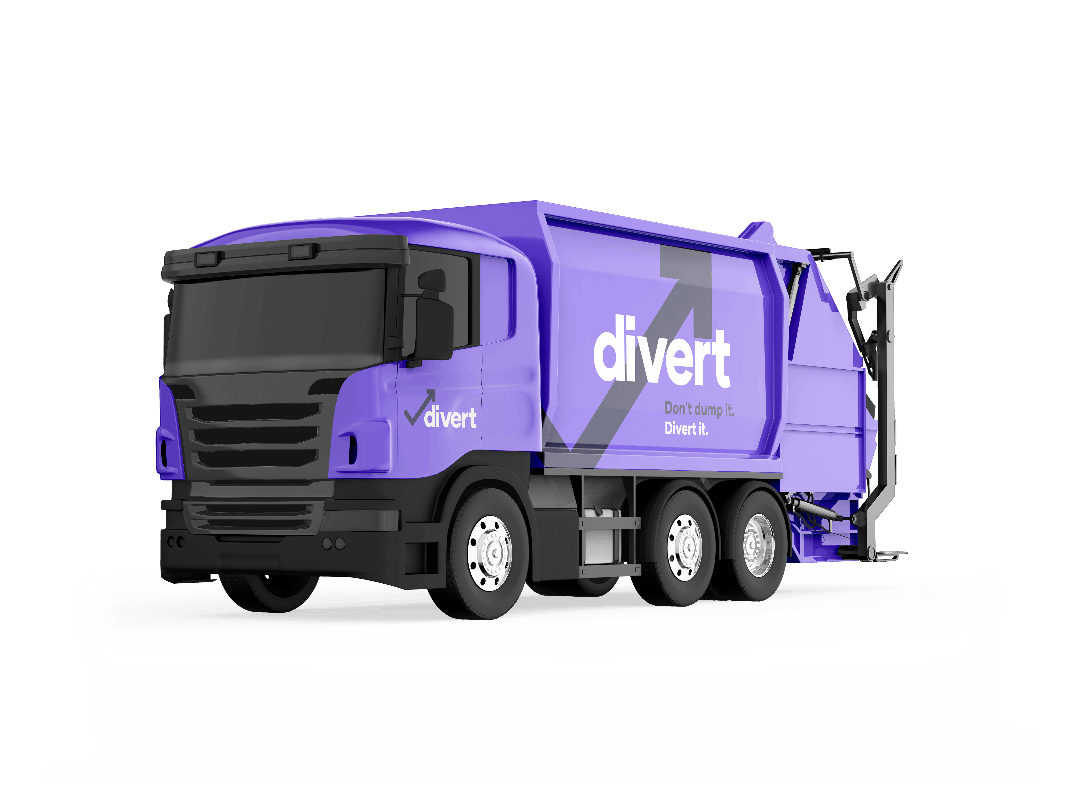
Our purple bin trucks are arriving in Birmingham, and we need your help naming them.
As Divert expands into the city with a new Birmingham depot, we’re inviting residents and businesses to come up with the perfect name for one of our newest trucks.
Whether it’s a Birmingham-inspired pun, a local reference, or just something that’ll make people smile in traffic, we want to hear it.
Think: “Peaky Bin-ders”, “The Bull-Bin”, or something even better!
The winning name will be added to the truck cab for everyone to see as it travels around Birmingham.
What does the winner get?
The winning entry will:
Be displayed on one of our new purple bin trucks
Be announced on the Divert website and social media channels
Receive a £100 donation to a charity of their choice
Who can enter?
Anyone across the UK can enter, but we’d especially love to hear from people in Birmingham and the surrounding areas as we join the local community.
Competition rules
We’re looking for names with personality, creativity, and ideally a nod to Birmingham.
A few quick rules:
Keep it clean and family-friendly
No offensive or inappropriate entries
Puns, local references, and silly ideas are all welcome
Winners will be chosen internally by the Divert team
The competition closes at 5 pm on Friday, 26th June.
Name our new bin trucks!
Hay Fever Season Could Leave Behind 33.5m Medicine Packs
Warmer, drier weather can increase pollen levels, and many hay fever sufferers will reach for tablets, sprays, eye drops and wipes to manage symptoms.
Divert has analysed over-the-counter sales of allergy medicine and NHS prescription figures to estimate how many hay fever and allergy medicine packs may be used each year. The analysis suggests around 33.5 million allergy medicine packs could be used annually, with many tablet packs leaving behind blister sheets that are normally recyclable through household kerbside collections.
The medication itself matters for people who need it. The hidden waste problem is what happens to the packaging once the tablets are gone.
Key findings
Divert estimates that 33.46 million allergy medicine packs could be used each year in the UK and England combined, based on OTC sales modelling and NHS prescription data.
-
A lower estimate suggests 26.27 million packs could be used each year.
A higher estimate suggests the figure could reach 40.64 million packs.
Many hay fever tablets are sold in blister packs made from bonded plastic and foil.
Empty blister sheets should not usually go in household recycling bins.
Unused or expired medication should be returned to a pharmacy for safe disposal, not placed in the bin or flushed down the drain.
Why does hay fever season create a packaging waste problem?
Hay fever is seasonal, but the packaging waste can be substantial.
During heavy pollen periods, people often buy antihistamine tablets, nasal sprays, eye drops and other allergy remedies. Tablets and capsules are commonly packaged in blister sheets because the format protects each dose from moisture, air and contamination.
That protection is important. It helps keep medicines safe, stable and clearly separated. But the same packaging design also makes blister packs difficult to recycle.
Most blister sheets are made from a mix of plastic and aluminium foil. Once those materials are bonded together, they are hard to separate through standard household recycling systems. That means millions of empty blister sheets may end up in general waste unless they are taken to a specialist collection point.
How many allergy medicine packs could be used each year?
Divert modelled three scenarios using over-the-counter sales of allergy remedies and NHS prescription data.
The estimates were:
-
Low estimate: 26,279,392 combined packs
Mid estimate: 33,461,324 combined packs
High estimate: 40,643,256 combined packs
The mid estimate is based on 21,545,797 over-the-counter packs and 11,915,527 NHS prescription packs.
These figures should be treated as estimates of potential medicine pack use, not confirmed counts of packs thrown away. But they show the scale of packaging created by everyday allergy treatment.
Can you recycle blister packs?
Empty blister packs should not usually be placed in household recycling bins.
The cardboard box can normally be recycled at home, but the blister sheet should be removed first. The blister sheet is different because it is typically made from mixed materials, usually plastic and foil, which are not accepted through most kerbside recycling systems.
Some health and pharmacy retailers offer blister pack take-back schemes, but availability varies by store and location. Boots, for example, runs an in-store blister pack recycling scheme at participating stores, while Superdrug says medicine blister recycling is available through its pharmacy recycling programme. It is best to check local availability before making a trip. (Boots, Superdrug)
As a simple rule:
-
Recycle the cardboard box if it is clean and accepted locally.
Keep the blister sheet out of household recycling.
Use a specialist take-back scheme where available.
Put empty blister sheets in the general waste if no suitable scheme is available.
What should you do with empty blister packs?
The safest approach is to properly separate the packaging.
For empty hay fever tablet packs:
-
Remove the blister sheet from the cardboard box.
Recycle the cardboard box at home if your council accepts them.
Do not put the blister sheet in household recycling.
Check whether a nearby pharmacy or retailer offers a blister pack recycling scheme.
If no scheme is available, place the empty blister sheet in general waste.
This advice applies to many medicine blister packs, not only hay fever tablets.
What should you do with unused or expired medicine?
Unused or expired medicine should not be placed in household waste, recycling bins or toilets.
Community pharmacies in England provide an essential service for accepting unwanted medicines from patients, with NHS arrangements in place for waste contractors to collect them.
That means if you have leftover or expired hay fever tablets, oral solutions, nasal sprays or eye drops, the safest option is to return them to a pharmacy.
Do not flush medicine down the drain. Medicines can contaminate water systems and should be handled through the correct healthcare waste route.
What businesses should consider during hay fever season
This is mainly a household waste issue, but businesses can still play a part.
Workplaces, clinics, pharmacies, schools, universities, gyms and public venues may see more allergy medicine packaging during spring and summer. Most of this will be small, but small waste streams can still contaminate recycling if staff or visitors put blister sheets in the wrong bin.
Businesses can help by:
-
Keeping general waste bins available in staff rooms and washrooms.
Making recycling signage clear.
Avoiding vague “all packaging” recycling messages.
Reminding staff that blister sheets should not go in standard recycling bins.
Returning unused workplace medicines through the correct pharmacy or clinical waste route.
Reviewing waste streams where healthcare, pharmacy or wellbeing products are used regularly.
For pharmacies, clinics and health retailers, blister pack disposal is also a communication issue. People are more likely to recycle correctly when instructions are clear at the point they finish the product.
What needs to change with medicine packaging?
Blister packs are not used by accident. They protect medicines from moisture, air and contamination, and they help keep tablets separated and labelled.
That means a quick packaging swap is not always simple. Any change to medicine packaging must ensure patient safety, clarify dosage and control contamination. The Association of the British Pharmaceutical Industry notes that pharmaceutical packaging changes must balance sustainability with medicine safety and regulatory requirements. (ABPI)
Still, there are clear areas for improvement.
Medicine packaging needs:
-
Clearer disposal instructions on boxes.
More visible guidance on whether blister sheets can be recycled.
Wider access to take-back schemes.
Better public education during peak hay fever season.
More investment in packaging designs that protect medicines while reducing waste.
People should not need to research packaging rules every time they finish a strip of tablets.
John Verity, clinical waste expert at Divert, comments:
“People shouldn’t feel guilty for using hay fever medication they need, but the packaging does need clearer disposal advice. Blister packs are made by bonding plastic and foil together, which means they usually can’t go in normal household recycling.
“The cardboard box can normally be recycled, but the blister sheet should stay out of the recycling bin unless there’s a specific take-back scheme. Clearer labelling and wider collection points would make a real difference during peak hay fever season.”
Final thoughts
Hay fever medication is essential for many people. The issue is not the medication itself, but the amount of hard-to-recycle packaging left behind during peak allergy season.
Empty cardboard boxes can usually be recycled. Empty blister sheets usually cannot go in household recycling. Unused or expired medicine should be returned to a pharmacy.
Divert helps households and businesses dispose of waste responsibly and keep recyclable materials out of the wrong bins. If your workplace, pharmacy, clinic or venue regularly deals with medicine packaging or healthcare-related waste, reviewing your waste setup can help reduce contamination and improve safe disposal.
Methodology
OTC hay fever remedy sales value for 2025 was taken from Statista, which reports sales in Great Britain.
As the OTC category covers wider hay fever remedies, not only tablets, the analysis modelled three scenarios where 40%, 60% and 80% of sales value was attributed to tablet or capsule products.
These values were divided by an average 30-tablet antihistamine pack price of £5.84, based on a basket of current own-brand and branded antihistamine products from major UK retailers.
NHS prescription data was analysed separately using NHSBSA data for tablet and capsule presentations of common antihistamines dispensed in England in 2025.
Liquid formats, including syrups, oral solutions and suspensions, were excluded from the NHS prescription calculation.
Total dispensed quantities were converted into estimated prescription packs using a standard 30-tablet pack size.
Figures should be treated as estimates of potential medicine pack use, not confirmed counts of packs binned. The OTC data covers Great Britain, while the NHS prescription figures cover England.
Data was collected on 18th May 2026 and is subject to change.
Recycling Food Waste Could Power
500,000+ Homes
Food waste could soon become one of the UK’s most overlooked energy sources.
New analysis from Divert shows that England’s food waste collections could generate enough energy to power more than 500,000 homes, as Simpler Recycling is rolled out across the country.
With standardised food waste collections and increased participation from households and businesses, organic waste is set to play a much more prominent role in renewable energy generation.
A growing source of untapped energy
Food waste is already being collected and processed across many parts of England, but the current picture is fragmented.
Based on available local authority data, participating councils currently collect 2,478,241 tonnes of organic waste each year. Through anaerobic digestion, this can generate around 743,472,398 kWh of energy.
That is already enough to power approximately 275,360 homes annually.
However, many councils do not yet offer full food waste collections. This means a significant amount of potentially valuable material is still being lost to general waste streams.
What changes under Simpler Recycling?
The enhanced rollout of Simpler Recycling will require all English local authorities to offer food waste collections. By standardising how waste is separated and collected, the aim is to increase recycling rates and reduce confusion.
For households and many businesses, this means separating food waste alongside other key streams such as dry mixed recycling and general waste.
As collections become more consistent nationwide, the volume of food waste captured is expected to increase significantly.
Divert’s analysis estimates that when all councils introduce food waste collections, total volumes could rise by 1,704,311 tonnes, bringing the total to 4,182,552 tonnes per year.
This increase alone could generate an additional 511,293,300 kWh of energy, enough to power a further 189,367 homes.
The impact of higher participation
Beyond the rollout of collections, participation levels will be key in unlocking the full potential of food waste.
With clearer national rules, improved communication, and more consistent services, it is realistic to expect increased household and business engagement.
If participation increases by just 20% across councils that already collect food waste, total volumes could reach 4,678,200 tonnes annually.
This would generate around 1,403,460,178 kWh of energy, enough to power approximately 519,800 homes.
To put that into perspective, this level of energy could:
Power hundreds of thousands of households each year
Support the equivalent energy demand of hundreds of supermarkets
Supply energy to multiple small towns
It highlights how food waste is no longer just a disposal issue, but a meaningful contributor to the UK’s energy mix.
How food waste becomes energy
Food waste is processed through anaerobic digestion, a natural process where organic material breaks down in the absence of oxygen.
This produces biogas, which can be used to generate electricity and heat or upgraded into biomethane for use in the gas grid. The remaining material, known as digestate, is used as a fertiliser.
With more waste captured through dedicated collections, the UK has an opportunity to scale this process significantly and make better use of an often overlooked resource.
Regional differences and growth potential
The data also highlights clear regional differences in how food waste is currently collected and where the biggest opportunities lie.
At present, the South East collects the highest volume of food waste, followed closely by the East of England and the North West.
However, this balance is expected to shift as more councils introduce collections.
The North West is projected to become the leading region once all councils offer food waste services, with the potential to collect over 648,000 tonnes annually.
The North East shows the most significant growth potential, with a projected increase of more than 31,000%. This is largely because only one council in the region currently reports food waste collections.
Yorkshire and the Humber is also expected to see substantial growth, with major urban areas such as Leeds projected to become some of the largest contributors once collections are fully implemented.
Leading local authorities
Some councils are already setting the pace on food waste collection.
Stockport currently collects the highest volume of organic waste, followed by Cheshire East and East Riding of Yorkshire. Several North West authorities feature prominently among the top collectors, highlighting the region’s strong existing infrastructure.
Looking ahead, larger cities that do not yet offer full collections are expected to climb the rankings. Birmingham and Leeds are both projected to become among the top food waste collectors once services are introduced.
This shift reflects the impact that consistent, nationwide collection systems can have when applied across densely populated areas.
What this means for businesses and households
For businesses, particularly in sectors such as hospitality, retail, and food production, the expansion of food waste collections brings
both new responsibilities and opportunities.
Separating food waste correctly will become a standard requirement, but it also provides a more efficient and sustainable way to manage waste.
For households, simpler and more consistent systems should make recycling easier to understand and follow, increasing overall participation.
John Verity, Managing Director at Divert, commented:
“The introduction of standardised food waste collections is a positive step forward. At the moment, the picture varies widely across England, and that inconsistency limits how much waste we can recover and reuse.
“What’s important now is helping people understand the value of separating food waste correctly. When you look at the energy potential, it becomes clear that this is not just about waste disposal. It’s about making better use of a resource that can contribute to the UK’s wider energy goals.”
A shift in how we view food waste
As food waste collections expand, there is a clear shift in how organic waste is viewed.
Rather than being something to dispose of, it is increasingly recognised as a resource that can be recovered and reused.
With the right infrastructure and participation, food waste has the potential to support renewable energy generation at scale, reduce reliance on landfill, and contribute to a more circular economy.
Simpler Recycling is expected to play a key role in accelerating that transition.
Methodology
Divert analysed publicly available local authority waste data across England to estimate current food waste collection volumes and energy potential.
Energy generation was calculated using an average conversion rate of 300 kWh per tonne of food waste through anaerobic digestion.
Population data and average food waste generation rates of 0.07 tonnes per person were used to estimate potential increases in regions and councils where collections are not yet fully implemented.
A projected 20% increase in participation was applied to existing food waste collection areas to model potential future uptake under standardised national recycling rules.
You can view the full dataset and methodology here.
Divert Accepted Into The Leeds
Accredited Waste Carrier Scheme
Leeds-based waste management company Divert has been accepted into the Leeds Accredited Waste Carrier Scheme (LAWCS), an initiative helping residents and businesses find trusted, compliant waste carriers.
Introduced by Leeds City Council in early 2024, the scheme aims to tackle illegal waste operations and reduce fly-tipping across the region. By creating a directory of vetted waste carriers, the council instils greater confidence for clients choosing who to entrust with their waste.
Divert’s acceptance into the scheme recognises the company’s commitment to responsible waste management, transparency, and full compliance with UK waste regulations.
What is the Leeds Accredited Waste Carrier Scheme?
The LAWCS was created to help residents avoid rogue waste collectors and ensure waste is disposed of legally and responsibly.
A study carried out before the scheme’s launch suggested that as many as 60% of waste carriers could be operating illegally. These operators often collect waste cheaply but then dump it in:
Back alleys
Private land
Parks and natural beauty spots
This harms the environment and shifts clean-up costs to local authorities.
The LAWCS helps address this problem by creating a directory of waste carriers that have passed a set of checks and agreed to operate to recognised standards. Members of the public can also leave feedback and ratings, helping others make informed decisions.
What businesses must do to become accredited
Joining the LAWCS requires businesses to meet strict requirements and pass background checks.
Applicants must provide detailed operational information, including:
Waste carrier registration numbers
Fleet details
The authorised disposal sites they use
Leeds City Council also ensures that applicants have no history of environmental crime and requires operators to agree to a code of good practice.
Divert successfully met these standards and has been accepted as an accredited member of the scheme.
Why illegal waste carriers remain a major issue
Fly tipping continues to be a growing problem across the UK. Government figures show there were 1.15 million fly-tipping incidents recorded in England during 2023/24.
Illegal operators often advertise cheap waste removal services but dispose of waste unlawfully. Instead of taking rubbish to licensed facilities, it may be dumped illegally.
This harms local environments and communities, putting residents and businesses at risk.
Under UK waste duty of care laws, anyone who produces waste must ensure it is handled by a licensed carrier and disposed of properly. If waste is fly-tipped after collection, the original waste producer could still face penalties.
Choosing an accredited waste carrier helps reduce this risk and ensures waste is handled responsibly.
Support for the scheme
John Verity, Managing Director at Divert, praised the council’s initiative and highlighted the wider benefits the scheme could bring:
“This scheme is a great way to help residents and businesses make informed decisions when choosing a waste carrier.”
“Rogue traders still operate in parts of the industry, with little regard for the environmental impact or the people who unknowingly use their services.”
“We’re proud to have become an accredited member and believe initiatives like this could benefit communities across the UK. Fly tipping continues to be a serious issue, and schemes that bring transparency to the sector are an important step forward.”
Why choosing an accredited waste carrier matters
For both residents and businesses, choosing a legitimate waste carrier is essential.
Licensed and accredited waste companies follow strict regulations when transporting and disposing of waste. They ensure rubbish is taken to authorised facilities where it can be:
Recycled
Reused
Safely disposed of
Using a reputable carrier helps protect the environment and ensures waste producers meet their legal duty of care. The LAWCS make it easier for people in Leeds to identify vetted and approved waste carriers.
Divert’s commitment to responsible waste management
Divert helps households and businesses across Yorkshire dispose of waste responsibly and reliably.
Based in Leeds, the company operates a fleet of purple trucks, vans, and bins that collect a wide range of waste. All waste collected by Divert is diverted away from landfill and handled through authorised disposal facilities.
You can view our LAWCS listing to find out more about Divert’s accreditation and the standards required by the scheme.
Divert’s Search for Britain’s Rudest Produce
This Valentine’s Day, we’re celebrating wonky fruit and veg.
Divert has partnered with WonkyVegBoxes to find the UK’s rudest-looking produce. The cheekiest carrot, the most suggestive strawberry, or the parsnip with real personality.
It’s a light-hearted competition with a serious aim: starting a conversation about food waste and the perfectly good produce that’s rejected simply for how it looks.
If your fruit or veg made you laugh, blush, or do a double take, we want to see it.
What’s the prize?
The winning entry will receive:
One fruit box and one vegetable box from WonkyVegBoxes.
Why we’re doing this
A huge amount of food is wasted before it ever reaches our plates. Misshapen, oversized, or unusual-looking fruit and vegetables are often rejected, despite being just as good to eat.
By celebrating imperfect produce, we’re shining a light on how small attitude changes can help reduce food waste — sometimes with a bit of humour along the way.
Enter your veg!
Terms and conditions
1. Eligibility
Open to residents of the United Kingdom aged 18 or over
Employees of Divert, WonkyVegBoxes.co.uk, or anyone directly involved in the promotion, and their immediate families, are not eligible to enter
2. How to enter
Submit a photograph of your fruit or vegetable via the competition entry form
All entries must be original and your own work
Multiple entries are allowed
Entries must be submitted before 20 February
3. Competition rules
Entries must be suitable for public sharing and must not contain offensive or illegal content
By entering, participants grant Divert and WonkyVegBoxes.co.uk permission to use, reproduce, and publish submitted images for competition-related promotional purposes, including press, website, and social media
Entrants retain copyright of their images
4. Judging and winner selection
The winner will be chosen internally by Divert based on creativity, humour, and overall “rudest” appearance
The judges’ decision is final
The winner will be contacted by email within a reasonable period after the closing date
5. Prize
The prize consists of one fruit box and one vegetable box from WonkyVegBoxes.co.uk
The prize is non-transferable, non-exchangeable, and no cash alternative is available
Please note: WonkyVegBoxes.co.uk is unable to deliver to the Scottish Highlands. In the event that the winner resides in this area, an alternative prize of equal value will be offered.
A substitute prize of equal or greater value may be offered if required
6. Publicity
By entering, participants agree to their name, photo, and entry being shared publicly in connection with the competition
7. Data protection
Personal data will be used solely for administering the competition
Data will not be shared for marketing purposes without consent
All data will be processed in line with Divert’s privacy policy
8. Limitation of liability
Divert and WonkyVegBoxes.co.uk accept no responsibility for lost, late, or incomplete entries or technical issues
By entering, participants agree to release both parties from liability related to participation or prize delivery
9. General
Divert reserves the right to amend, suspend, or cancel the competition at any time
These Terms & Conditions are governed by the laws of England and Wales
Christmas is the busiest time of year for many UK businesses. Retailers welcome more shoppers. Hospitality venues take more bookings. Offices celebrate the season while preparing to close for the holidays.
With more people and more activity comes more waste. The UK produces around 30% more waste over Christmas than the rest of the year. And this festive period is the first major test of Simpler Recycling rules, which require more efficient waste separation.
Prevent overflowing bins, compliance issues, and unexpected collection costs at the worst possible time with our Christmas waste guide.

Why do businesses create
more waste at Christmas?
Retailers often receive heavier deliveries, leading to piles of cardboard and plastic packaging.
Restaurants, pubs, and hotels generate increased food and glass waste as customers enjoy festive menus and parties.
Offices produce extra DMR and decorations during staff celebrations.
Even a small increase in waste can cause problems:
- Bin lids won’t close
- Waste piles up in customer-facing areas
- Hygiene issues begin to develop
- Local enforcement officers issue penalties for improper storage
Extra collections or bigger bins help businesses avoid disruption during their busiest weeks.
Simpler Recycling and
Christmas 2025
Many English businesses must now separate materials such as cardboard, glass, metal packaging, plastics, and food waste. The Christmas rush increases the risk of contamination when teams are under pressure.
Seasonal or temporary staff may not be familiar with your waste system. That can lead to recyclables ending up in general waste, increasing disposal costs.
Before the peak period:
- Check you have the right bins for separated waste
- Position bins where waste is produced
- Brief all staff on what belongs where
Better preparation protects compliance and avoids extra charges.

Do commercial waste collections
cost more at Christmas?
Some providers increase pricing over the festive season due to capacity limitations or landfill disposal costs. Landfill tax increased again in April 2025, making landfill-heavy waste streams more expensive just as waste volumes spike.
Working with a zero-landfill provider helps avoid these extra costs.
Divert offers:
- Free bins delivered fast
- Charges only for collections
- Clear pricing with no festive surcharges
- Sustainable disposal with zero waste to landfill
This gives businesses cost control when tight margins are under pressure.
How to arrange extra collections
for Christmas
Start by reviewing previous years or current festive demand to estimate your waste increase. Even one extra bin or collection can prevent an operational headache.
You may need:
- More frequent food waste collections
- Bigger bins for cardboard
- Additional glass recycling, especially for hospitality
Booking early secures availability. If demand changes, flexible services help maintain hygiene and compliance right through December.
For sudden surges, on-demand support avoids waste backing up over bank holidays.
Reduce waste and
costs this Christmas
Even during the festive peak, small actions reduce waste and environmental impact. They also save money.
Flatten cardboard to make better use of bin space. Store recycling correctly to reduce contamination. Donate surplus goods or food instead of disposing of them. Choose reusable or more sustainable decorations if hosting events.
Less waste means fewer collections and lower overall disposal costs.
Why choose Divert for
festive waste collections
Divert supports businesses across Yorkshire through their busiest seasonal period. We understand the practical pressures that Christmas brings.
What we offer:
- Free bins
- No delivery or hire charges
- Only pay for the collection of bins
- Daily, weekly or fortnightly schedules
- On-demand collection options
- Zero waste to landfill
- Licensed and compliant operations
- Helpful support from a local team
This keeps your business clean, safe, and ready for customers every day in December.
Get a Christmas waste quote
for your business
Tell us how your waste levels are expected to change this Christmas, and we will create a tailored plan that keeps collections running smoothly.
Quick quotes. Clear pricing. No festive waste worries.
Call 0333 444 0117 or contact us online today for your free quote.
Focus on your customers this Christmas. Let Divert handle the waste.

Get a free quote
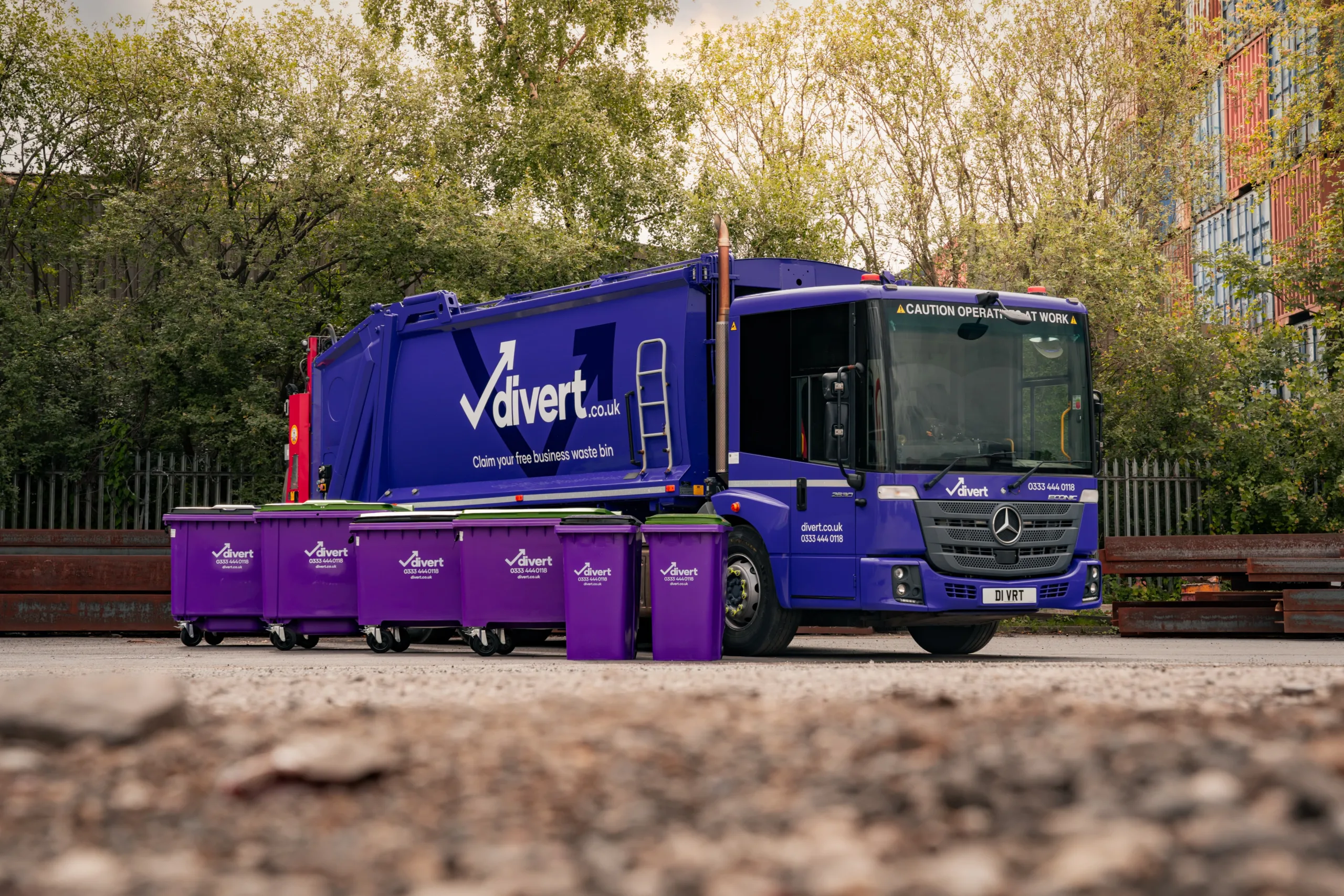
Expect to see purple bins popping up and our iconic purple waste trucks driving down the streets of Sheffield, Rotherham, and Barnsley soon, as Divert is expanding into South Yorkshire. Businesses across the county can now access our services for regular, reliable, and affordable commercial waste collection.
Currently, Divert’s purple trucks and matching bins can be seen across York, Leeds, Bradford, Harrogate, and Wakefield, with the company’s roots in North and West Yorkshire. After many successful years and thousands of happy customers, we thought it was the right time to offer our services to those businesses just that little bit further south.
Many businesses in South Yorkshire can take advantage of free purple bins – only pay for collections – and a diversion of all waste away from landfill from the start of October. Find out where and what we cover or simply get in touch today for a free quote – call 0333 444 0117 or contact us online.
Where in South Yorkshire
will Divert cover?
Divert is rolling out its services across Sheffield, Barnsley, and Rotherham. Businesses based in these cities and towns will soon be covered by Divert’s purple trucks.
Postcodes covered include:
Sheffield – S1, S2, S3, S4, S6, S7, S8, S9, S10, S11, S12, S13
Rotherham – S60, S61, S62, S65
Barnsley – S70, S71, S74, S75
Find out more about the waste services available and areas Divert covers on these pages dedicated to commercial waste collection in each region of South Yorkshire:
-
Sheffield waste services
Commercial waste services in Sheffield from postcodes including S1, S2, S3, S4, S6, S7, S8, S9, S10, S11, S12, and S13.
-
Rotherham waste services
Business waste collections from companies in Rotherham based in postcodes including S60, S61, S62, and S65.
-
Barnsley waste services
Waste collection services for businesses in Barnsley based in postcodes including S70, S71, S74, and S75.
-
South Yorkshire waste services
Regular and reliable professional waste collection services for businesses of any size and industry in South Yorkshire.
When will Divert start operating
in South Yorkshire?
From October 2025, businesses in the above postcode areas across Sheffield, Rotherham, and Barnsley can take advantage of Divert’s services. Companies will be able to access our price match guarantee, free bins offer, and standout customer service.
Contact us today for a free no-obligation quote and for more information – call 0333 444 0117 or contact us online.
Why use Divert in South Yorkshire?
Divert provides regular waste collections for businesses and some one-off removals and office or household clearances. Services cover everything from regular trade waste removal, such as daily food waste, general waste, and cardboard recycling collections from businesses, to removals of old sofas from homes and one-off office clearances.
Save money on your commercial waste management in South Yorkshire as Divert provide free bins. Customers don’t pay for the purple bins – with no hire or delivery fees – they simply cover the cost of collections. This could be daily, weekly, or fortnightly collections based on the needs of the business.
As the name suggests, Divert operates a zero-waste-to-landfill policy, meaning all collections are processed sustainably and diverted away from landfill sites. Businesses pay less in landfill tax for disposal this way and do their bit for the planet as waste is recycled, composted, sent to anaerobic digestion plants, depending on the material.

What does the future
hold for Divert?
South Yorkshire marks the start of a plan to expand the company to have full nationwide coverage. Divert aims to follow on from Sheffield, Barnsley, and Rotherham with expansion into Doncaster before continuing to set up services further south.
John Verity, Managing Director at Divert, said:
“We’re beyond excited to be expanding the Divert offering into South Yorkshire. This marks the start of an exciting chapter as we look to roll out our coverage to more towns and cities across the UK.
“Our move will help to support business and domestic customers across the region to save money on their waste, and provide more options for sustainable disposal. Our commitment to diverting waste from landfill will help contribute to local circular economies and reduce regional carbon footprints.”
Get a free quote for waste
collection in South Yorkshire
Run a business in South Yorkshire and want to save on your waste management costs while operating sustainably? Then contact Divert today to see if our expansion covers your location and find out how much you could save with a free no-obligation quote based on the services you need.
Simply tell us your location, the types and rough volume of waste you produce (or estimated number and sizes of bins you use). One of our expert team can assess your needs and advise on the most cost-effective and efficient option, including the best bins and collection frequencies, and provide a price.
All waste is diverted away from landfill, and there are no delivery, bin hire, or hidden costs – you only pay for collections. Get a free bespoke quote for waste collection from your business in South Yorkshire today – call 0333 444 0117 or contact us online.
Get a free quote
There are more than 350,000 homes and 100,000 businesses in Leeds. Each one creates all sorts of waste, from daily domestic rubbish thrown in black wheelie bins at home to food waste disposed of by the hundreds of restaurants across the city. But what happens to all this waste once the bins are collected?
The domestic recycling rate in Leeds is around 39%, which is below the UK average of about 44%. However, that has still doubled in almost 20 years since 2006, when Leeds City Council set out its waste strategy with the aim of becoming carbon neutral by 2030. Yet it means over half of all domestic waste isn’t recycled in Leeds.
Changes and improvements are ongoing to the waste landscape across West Yorkshire’s biggest city. Find out what happens to waste in Leeds after it’s removed from your household or business to understand where it goes and how it’s processed.

What happens to
household waste in Leeds?
All households in Leeds should have a black bin for general waste and a green wheelie bin for mixed recycling (paper, cardboard, plastic, metal, and glass). Some homes also have a brown bin for garden waste. Much of the city has weekly black bin collections, fortnightly green bin collections, and seasonal brown bin collections.
Leeds City Council manages household waste in the city and works with various suppliers. What happens to household waste in Leeds depends on the type of rubbish and which bin it’s thrown away in:
General waste
Most general waste emptied from household black bins in Leeds is taken to the Recycling and Energy Recovery Facility (RERF) at Cross Green. This facility was formally opened in late 2016 and can handle around 214,000 tonnes of residual waste collected from homes across Leeds per year.
The general waste is sorted, with any recyclable metals removed. Waste is then incinerated at temperatures greater than 850°C, which generates electricity to supply the National Grid. It’s estimated to be enough to power about 22,000 homes, while the steam created is harnessed for the District Heating Network to supply energy to Leeds homes and businesses.
The introduction and use of the RERF in Leeds means the city now sends less than 3% of household waste to landfill. All black bin waste collected from Leeds homes should be processed at the RERF.

Household recycling
Most domestic recycling placed in green household wheelie bins in Leeds is transported to the Leeds Materials Recycling Facility (MRF) operated by HW Martin. Mixed dry recyclable waste materials like paper, cardboard, plastics, metals, and glass are processed and sorted before being sent to recycling facilities to prepare them for manufacture.
The MRF formally opened in summer 2007 and can handle 80,000 tonnes of dry mixed recycling every year. Recyclable materials pass through state-of-the-art sorting technology and are separated into their individual streams. Then they’re baled or segregated into loose loads and transported to factories and specialist facilities to create materials ready for the manufacturing sector.
Paper is pulped and turned into fresh rolls, while aluminium cans are melted and reformed into ingots, for example. There’s a separate plastic sorting facility that segregates different polymer types too, before flaking and washing them and then delivering to plastic product manufacturers. Glass is also cleaned, graded, and crushed to create two size grades of glass cullet.
Garden waste
Around 200,000 homes in Leeds have a brown bin for garden waste, which is normally collected from late March until late November. It’s estimated that more than 30,000 tonnes of domestic garden waste are collected from Leeds homes every year.
This garden waste is taken to various local composting sites across Leeds and the wider Yorkshire region. It breaks down naturally with the compost used for farming, gardening, and land restoration work in Leeds and the surrounding areas.
What happens to commercial
waste in Leeds?
Businesses must arrange commercial waste collection in Leeds by licensed waste carriers. Leeds City Council does not offer free collection for trade waste. Only two HWRCs in Leeds accept commercial waste, but you can only transport it to either site if you hold a waste carrier’s licence:
- Kirkstall HWRC – Evanston Avenue, Kirkstall, Leeds, LS4 2HR
- Seacroft HWRC – Limewood Road, Seacroft, Leeds, LS14 1LU
What happens to commercial waste in Leeds depends on the specific materials and the waste management company your business uses. At Divert, we divert all waste away from landfill in Leeds. The likes of glass, paper, cardboard, and metal are taken to MRFs and recycling facilities.
Food waste may go to an industrial composting site or anaerobic digestion plant, while general waste can be transported to an energy from waste (EfW) facility. These options help keep commercial waste produced by businesses across Leeds out of landfill and improve the city’s sustainability.

Explore our Leeds waste services
Divert is a dependable waste management provider in Leeds. We provide free bins to businesses across the city to separate waste materials. There are no delivery or rental fees for the bins – you just pay for collection. All drivers are licensed waste carriers, so you can enjoy peace of mind that your commercial rubbish is managed responsibly.
We divert all waste away from landfill to protect the environment, save you money on landfill tax, and recycle as much as possible. Our commercial waste services in Leeds include:
-
Dry mixed recycling in Leeds

-
Food waste collection in Leeds

-
General waste collection in Leeds
-
Glass collection in Leeds
-
Cardboard recycling in Leeds

-
Clinical waste disposal in Leeds

-
Garden waste collection in Leeds

-
WEEE collection in Leeds


Get a free quote
A waste transfer note (WTN) is a legal document used in the UK when non-hazardous waste is transferred from one party to another. This covers every load of rubbish removed from your business premises before transportation and disposal. It records the type of waste, its origin, who handles it, and its final destination.
Using waste transfer notes aims to create a clear and traceable record of waste movement to try to prevent fly-tipping and illegal dumping. It provides proof that waste is managed responsibly and lawfully, and businesses demonstrate their duty of care obligations under the Environmental Protection Act 1990 by keeping proper notes.
Understand what a waste transfer note is, when and why your business needs one, and how to complete a WTN properly to ensure your commercial waste management processes operate legally and safely.

Waste transfer note requirements
Businesses in the UK have a legal responsibility to make sure their waste is collected, transported, and disposed of safely and legally. A crucial part of this process is the waste transfer note. These only apply to non-hazardous waste (such as general waste, food waste, glass recycling, and more). Hazardous waste requires a different consignment note.
A valid waste transfer note must include this information:
- Description of the waste – the type of waste (such as food, general, glass, paper, etc.), with enough detail to allow proper handling, and the correct European Waste Catalogue (EWC) code.
- Quantity of waste – such as the number and size of bags, weight in kilograms, or volume in cubic metres.
- How the waste is contained – in wheelie bins, a skip, drums and barrels, plastic bags, or loose.
- Date and place of transfer – the exact day, time, and location where the waste was collected and changed hands.
- Names and addresses of both parties – the waste producer (your business) and the name of the registered waste carrier or recipient.
- Carrier and site details – the waste carrier’s licence number and the receiving site’s environmental permit or exemption.
- Standard Industrial Classification (SIC) code – your business’s SIC code that identifies the type of business activity.
- Signatures – both the producer and the carrier (or the broker if one is involved) must sign the WTN.
- Confirmation of Duty of Care – declaration that both parties have met their responsibility to handle the waste properly.
Businesses in Northern Ireland must also include a statement that the waste hierarchy was applied. The WTN requires this information, otherwise it may be invalid, which might leave your business at risk of penalties and enforcement action.
Further waste transfer note requirements are that a WTN accompanies each load of waste that leaves your business. The only exception is if you have a season ticket, which covers multiple similar collections over 12 months. Businesses must keep a copy of each WTN for at least two years, so it’s available for inspection by the Environment Agency or local authorities.

How to fill in a waste transfer note
Use this waste transfer note guidance to uphold your duty of care and fill in a WTN properly:
- Identify your waste – use the correct six-digit EWC code and provide a clear description of the waste materials being transferred. For example, paper or cardboard packaging should use EWC code 15 01 01. Accuracy is vital, and you should avoid vague descriptions.
- Measure the quantity and include container details – state whether the waste is in bags, bins, skips, or any other waste containers (like barrels or drums). Estimate the weight or volume of the commercial waste and ensure it’s within any weight limits for the specific bins.
- Enter your SIC code – this is available from Companies House or HMRC records.
- Add carrier details – include the waste carrier’s registered licence number (you can check this on the Environment Agency’s public register).
- Provide details of the transfer date, time, and location – the locations should be your business’s address where the waste is stored. Including these details ensures a clear audit trail that’s easily traced.
- Include disposal or treatment site details – note the permit or exemption number of the facility receiving the waste.
- Sign and date the document – both the waste producer and the carrier must sign to confirm compliance.
Completing these steps ensures your document meets the waste transfer note requirements and upholds your duty of care. Retain and keep all WTNs organised and easily accessible in case of an inspection. If your business regularly produces the same type of waste, then you’ll probably be advised to use a season ticket to save paperwork and time.
Get a free waste transfer note with Divert
A waste transfer note is more than a form – it’s a legal safeguard for your business and the environment. That’s why at Divert, we provide a free waste transfer note for every collection and can advise and help with season tickets (or an annual waste transfer note).
Safe, legal, and responsible waste management is our priority, so we do as much as possible to help the process run smoothly. Following these waste transfer note requirements can ensure your business meets its responsibilities with confidence. Proper waste management avoids fines and legal issues while demonstrating your commitment to sustainability and environmental protection.
We can help your business manage any type and volume of commercial waste, including general and food waste, glass, cardboard, and dry mixed recycling. All rubbish is diverted away from landfill for responsible disposal (as your WTN will detail) and managed in line with Simpler Recycling regulations where applicable.
Speak to one of our friendly team members to discuss your commercial waste management needs, learn more about filling in a waste transfer note, and get a free no-obligation quote today. We can provide free bins for your waste too, with no delivery or rental charges, as you only pay for collection. Call 0333 444 0117 or contact us online today.